Oregano, Thyme and Clove on Your Skin: Why the Percentage Is Everything
Quick Answer: How Much Essential Oil Is Safe on Skin?
Far less than most people assume, and it varies enormously by oil. General cosmetic practice for leave-on body products sits around 1–2% total essential oil, and the hot oils — oregano, thyme, clove, cinnamon — are conventionally held well below that, often under a quarter of a per cent. Undiluted, several of these will burn skin outright. So when a product lists oregano, thyme and clove without concentrations, the honest position is that you cannot assess it from the label and a patch test is not optional.
- Typical leave-on total: around 1–2% essential oil.
- Hot oils: oregano, thyme, clove and cinnamon, kept far lower again.
- Undiluted: genuinely caustic — never apply neat to skin.
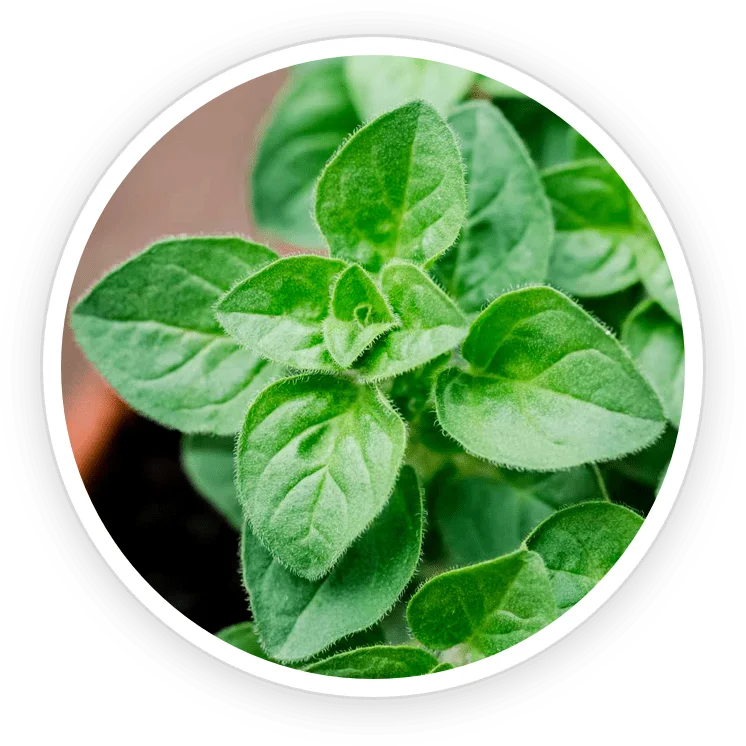
Potent is not the same as safe
Essential oils are concentrated plant chemistry — a bottle of oregano oil represents a great deal of oregano reduced to its volatile fraction. The compounds that make them interesting are the same compounds that make them irritating: carvacrol in oregano, thymol in thyme, eugenol in clove, cinnamaldehyde in cinnamon.
Two distinct problems follow. Irritation is dose-dependent and immediate: enough of a hot oil on skin causes redness and burning in anyone. Sensitisation is different and worse — an immune response that develops over repeated exposure, after which even tiny amounts trigger a reaction, permanently. Tea tree and lavender are both established sensitisers, and lavender's linalool becomes more sensitising as it oxidises in an ageing bottle.
Conventional cosmetic limits for leave-on products
| Oil | Key constituent | Conventional leave-on limit |
|---|---|---|
| Oregano | Carvacrol | Very low — a fraction of a per cent |
| Thyme (thymol CT) | Thymol | Very low — a fraction of a per cent |
| Clove bud | Eugenol | Well under 1% |
| Tea tree | Terpinen-4-ol | Low single digits in general cosmetic use |
| Lavender | Linalool | Low single digits; oxidises with age |
| Cedarwood | Cedrol | Comparatively well tolerated |
Those are conventions rather than statutes, and the exact figures differ between guidance bodies. The point of the table is the shape: the oils marketed hardest as “powerful” are the ones formulators keep the smallest.
What a missing percentage actually costs you
US cosmetic labelling requires ingredients to be listed in descending order of predominance, but it does not require concentrations. So a label listing oregano oil tells you it is there and nothing about whether it is 0.05% or 2%, and those are entirely different products in terms of how your skin will respond.
There is a partial workaround. Ingredients present at 1% or less may be listed in any order after the ones above 1%, so an essential oil appearing near the end of a long list is probably in the low range. That is an inference, not a fact, and it does not help at all when a manufacturer publishes a bare list of names in no stated order.
How to patch test properly
Apply a small amount to the inner forearm or behind the ear. Leave it for 24 hours without washing the area. Look for redness, itching, small bumps or a burning sensation. If nothing happens, you have ruled out immediate irritation at that concentration — you have not ruled out sensitisation, which by definition develops over repeated exposure, so it is worth staying alert over the first few weeks too.
Do not patch test on broken skin, and do not test on feet: it is the wrong place to discover a reaction, and reduced sensation in that area — common with diabetes and peripheral neuropathy — means a problem can progress without being felt.
The reasonable position
None of this means botanical topicals are bad. Tea tree in particular has a solid published record in skin applications, and formulators use these oils because they work at sensible concentrations. It means the concentration is the product, and a manufacturer that publishes sixteen ingredient names with no percentages has told you the flavour of the formula and withheld its safety profile. Patch test, start small, and stop at the first sign of a reaction.
Medical note: if you have diabetes, peripheral neuropathy or reduced sensation in your feet, speak to a clinician before applying anything new. An irritant reaction you cannot feel is the specific risk, and foot care in diabetes is a medical matter.
Scientific references
Frequently asked questions
How much essential oil is safe in a skin product?
Conventional cosmetic practice for leave-on body products is around 1 to 2% total essential oil, with hot oils such as oregano, thyme, clove and cinnamon kept far lower again. Undiluted essential oils should never be applied to skin.
Why do cosmetic labels not show percentages?
US cosmetic labelling requires ingredients in descending order of predominance but does not require concentrations. Ingredients at 1% or less may be listed in any order after those above 1%, which is the only indirect clue a list gives you.
What is the difference between irritation and sensitisation?
Irritation is immediate and dose-dependent — enough of a strong oil reddens anyone's skin. Sensitisation is an immune response that develops over repeated exposure, after which even small amounts cause a reaction, and it does not reverse.
How do I patch test a topical product?
Apply a small amount to the inner forearm or behind the ear, leave it 24 hours without washing, and check for redness, itching, bumps or burning. Do not patch test on broken skin, and do not test on your feet.
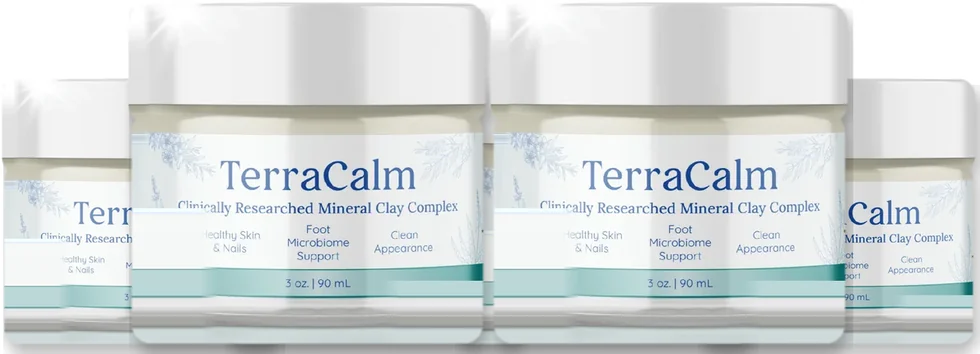
See the full TerraCalm ingredient list
All sixteen ingredients, what each one is for, and a straight account of which concentrations the manufacturer publishes.
Read the TerraCalm Review