French Green Clay: What It Actually Does on Skin
Quick Answer: Does Green Clay Do Anything Real?
Yes, and it is narrower than the marketing suggests. French green clay is mostly illite with some montmorillonite — layered aluminium silicates with an enormous surface area and a slight negative surface charge. That structure absorbs oil and water efficiently, which is why clay mattifies skin and why a mask tightens as it dries. It is a physical property, well established and genuinely useful. What clay does not do is “draw out toxins”, detoxify the body, or kill micro-organisms.
- Real: absorbs sebum and surface moisture; leaves skin matte and smoother.
- Real: mild mechanical exfoliation as it is rinsed away.
- Not real: pulling toxins from the bloodstream, or any antimicrobial action.
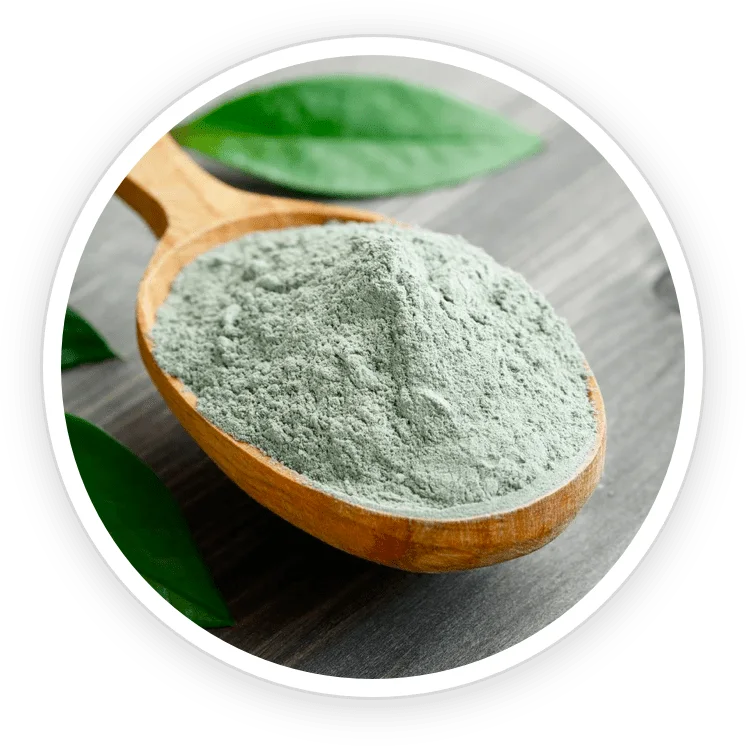
Where the green comes from
French green clay — sea clay, or illite — is quarried mainly in France and gets its colour from iron oxides and decomposed plant material in the deposit. Its mineralogy is unglamorous and it is the mineralogy, not the colour, that does the work: illite is a layered phyllosilicate, and layered silicates have enormous surface area per gram along with a slight negative charge on their faces.
Put that against skin and two things happen. Oil and water are absorbed into and between the layers. And positively charged particles on the skin surface — some soil, some cosmetic residue — are weakly attracted to the clay and rinse away with it. That is the entire mechanism, and it is enough to explain every honest thing clay is good for.
The word “detox”, and why it survives
The claim that clay draws toxins out of the body has an appealing shape and no route to happen. Absorption is a surface phenomenon: clay sitting on the stratum corneum has no access to the bloodstream, and the stratum corneum exists precisely to stop things crossing in either direction. Nothing systemic comes out through it because a mineral is sitting on top.
The claim persists because it describes a real sensation. Clay dries, the skin tightens, and afterwards the surface genuinely does feel cleaner — because surface oil and debris have been absorbed and rinsed. The feeling is honest. The explanation attached to it is not.
What clay does, and does not, do
| Claim | Verdict |
|---|---|
| Absorbs excess oil | True — the core, well-established property |
| Leaves skin feeling smoother | True — absorption plus mild exfoliation on rinsing |
| Reduces surface moisture and odour | Plausible — odour follows moisture and the bacteria it supports |
| Draws toxins from the body | False — no mechanism crosses the skin barrier |
| Kills bacteria or fungi | Not a property of clay itself |
| Treats an infection | No — that would make it a drug, not a cosmetic |
Why feet, specifically
The case for clay on feet is better than the case for clay on most other body parts, and it is an unglamorous one: feet are the sweatiest skin on the body, with the highest density of eccrine glands, and they spend the day in a warm enclosed environment. Moisture is the variable that drives odour and softening between the toes.
An absorbent mineral is a reasonable tool for a moisture problem. That is a real, modest, cosmetic benefit — and it is a completely different statement from claiming the clay treats anything.
What to look for on a clay product
Clay high in the ingredient list, so there is enough of it to matter. Emollients alongside it — shea butter, jojoba, a light carrier oil — because clay alone is drying and dry cracked heels are worse than oily ones. And ideally some indication of essential oil concentration, because that is the number that determines whether a botanical blend is soothing or irritating. Clay itself is one of the gentlest cosmetic ingredients there is; what gets blended into it is where the variability lives.
Medical note: a cosmetic clay is for appearance and comfort. If you have persistent nail discolouration, thickening, itching or skin breakdown, that is a clinical question and worth a proper diagnosis rather than a jar.
Scientific references
Frequently asked questions
Does French green clay detox the skin?
No. Clay absorbs oil and water at the skin surface and lifts loose debris when it is rinsed away. It has no route across the stratum corneum, so it cannot remove anything systemic. The clean feeling afterwards is real; the detox explanation is not.
Is green clay antibacterial?
Antimicrobial activity is not a general property of cosmetic clays. Some specific mineral clays from particular deposits have shown antibacterial effects in laboratory work, but that does not transfer to clay as a category or to a cosmetic formulation.
Why is clay used in foot products?
Feet have the highest density of sweat glands on the body and spend the day enclosed. Moisture drives odour and skin softening, and an absorbent mineral is a sensible tool against moisture. It is a modest cosmetic benefit, not a treatment.
Does clay dry out skin?
It can, which is why well-made clay products pair it with emollients and occlusives such as shea butter, jojoba or sunflower oil. On feet, dryness that turns into cracked heels is worse than the oiliness you started with.
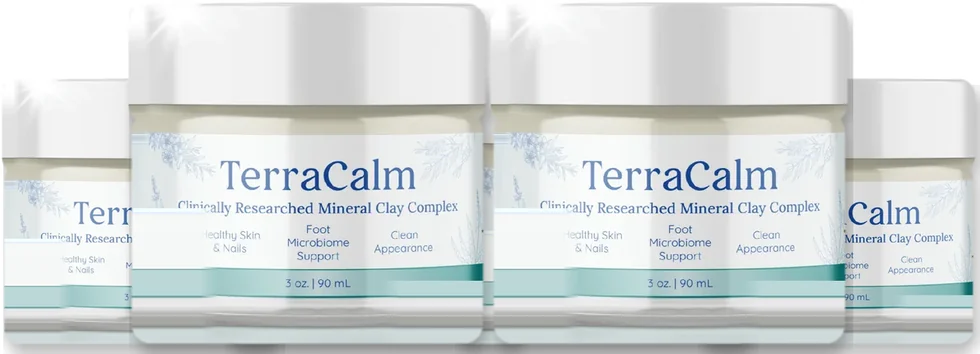
See how TerraCalm puts this together
A mineral clay base with sixteen listed ingredients — and an honest account of which of them do what.
Read the TerraCalm Review