Toenail Fungus Carnivore Diet vs Balanced Low-Sugar Eating
Quick Answer: Does Eating This Way Change a Fungal Nail?
No diet has been shown to clear a fungal nail infection, and the carnivore approach is not an exception. The claim behind it — that removing carbohydrate starves the fungus of sugar — misreads how the body works, because blood glucose is tightly regulated and never drops to zero no matter what you eat. A balanced pattern that keeps added sugar low is the more defensible choice of the two, mainly because good blood-sugar control is a genuine, well-documented factor in skin and nail infection risk, and because it is a way of eating you can actually keep up for the nine to twelve months a toenail takes to grow out.
- Holds up: poorly controlled blood glucose is associated with more fungal skin and nail infections.
- Does not hold up: the idea that cutting carbohydrate starves an existing nail infection.
- Worth knowing: diet influences the new nail being made, not the damaged nail you can already see.

What the toenail fungus carnivore diet claim actually says
The argument circulating online runs like this. Fungi feed on sugar. Carbohydrate becomes sugar. Remove all carbohydrate — eat only meat, fish, eggs and animal fat — and the fungus in your toenail has nothing to live on, so it dies and the nail recovers. It is a tidy story, it has an obvious villain, and it gives you something decisive to do this week.
Two links in that chain are sound. Fungi do metabolise sugars, and dietary carbohydrate does raise blood glucose. The link that breaks is the last one. Your body treats blood glucose as a variable to be defended, not a dial the menu turns. When intake drops, the liver makes glucose from lactate, glycerol and amino acids through gluconeogenesis, and blood levels stay within a fairly narrow band. On a zero-carbohydrate diet, glucose in the blood goes down somewhat and stays comfortably present. The tissue fluid bathing a nail bed is never sugar-free, so nothing there is ever starved.
This is why the toenail fungus carnivore diet claim keeps being repeated and never quite delivers. It is not that eating differently is pointless. It is that this particular mechanism was never available in the first place, so any benefit people notice has to come from somewhere else — usually from what a restrictive diet incidentally removes, or from the fact that people who overhaul their diet also start paying attention to their feet.
The one food link that does hold up
There is a real relationship between glucose and fungal infection, and it lives at the clinical end rather than the grocery end. People with diabetes, particularly where blood glucose is poorly controlled, have consistently higher rates of fungal skin and nail infections than people without. Several plausible reasons are proposed: higher glucose in tissue and sweat, reduced immune cell function at high glucose levels, reduced circulation to the feet, and neuropathy that lets small injuries go unnoticed until they are established.
What that association establishes is important and narrow. It says glycaemic control matters to infection risk. It does not say that a person with normal blood sugar can lower their risk further by eliminating carbohydrate, and it certainly does not say that any diet clears an infection already growing under a nail plate. Blood-sugar control in diabetes is managed with a clinician, and no article and no jar substitutes for that.
It is a useful example of how health claims drift. A well-evidenced clinical association gets restated one notch stronger, then another, and three restatements later a search result is telling people that bread caused their toenail. The original observation was worth having; the version that reached the internet is not the same statement.
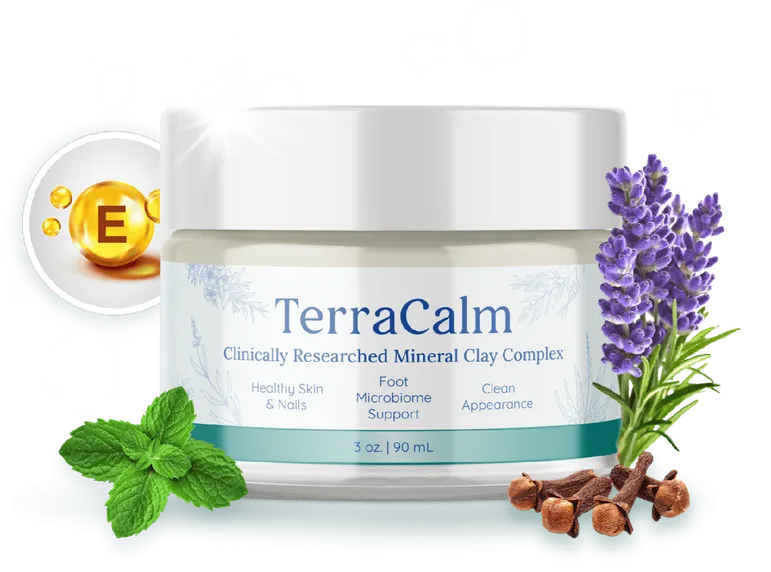
Food is the inside job. Feet also need an outside one.
Whatever you eat, the daily grooming side still has to happen — dry skin between the toes, softened calluses, less odour. That is the honest brief for a mineral clay, and it is what people searching for a best fungal nail treatment natural option are usually half-looking for.
See the Official TerraCalm OfferCarnivore and balanced low-sugar, compared honestly
Both patterns cut added sugar, which is the part everyone agrees on. They differ enormously in what else they remove, and that difference is the whole argument.
| Pattern | What it removes | Fibre and plant nutrients | Realistic to sustain 9–12 months | Evidence for nail outcomes |
|---|---|---|---|---|
| Carnivore | All plant foods: grains, fruit, vegetables, legumes, nuts, added sugar | Essentially none — zero fibre, minimal vitamin C, folate, potassium | Difficult for most people; socially restrictive | None — no trials in nail infection |
| Balanced low-sugar | Added sugar, sweetened drinks, most refined starch | High — vegetables, legumes, whole fruit, nuts retained | Yes — the closest thing to a default healthy pattern | Indirect — supports glycaemic control, which is a real risk factor |
| Low-carbohydrate (not zero) | Most starch and sugar; keeps non-starchy plants | Moderate | Moderate | Indirect — same glycaemic reasoning |
| Typical Western pattern | Nothing in particular | Usually below fibre recommendations | Yes, by default | None either way |
Read the last column carefully, because it is the point. Nothing in this table has trial evidence for nail outcomes. The best that can be said for any dietary pattern here is indirect and modest, and anyone telling you otherwise is filling a gap in the literature with confidence.
What removing every plant costs
Restriction is not free, and a nine-to-twelve month timeline makes the cost compound. Eating only animal foods removes dietary fibre completely, which changes bowel habit and gut microbial diversity within weeks. It removes almost all vitamin C, since organ meats supply only small amounts and muscle meat very little. It removes folate, most potassium, and the polyphenols associated with vascular health in observational work.
That last one deserves a moment, because circulation is genuinely relevant to toes. A toenail is served by the smallest vessels at the furthest point from the heart, and nail growth slows when peripheral circulation is poor. Any long-term pattern that works against vascular health is working against the thing you are waiting on. The evidence here is associative rather than proven, and it should be treated as a reason for caution rather than a settled verdict — but caution is the right posture when the alternative asks you to give up whole food groups for a year.
There is a fairer version of the carnivore case worth acknowledging. People who adopt it often do cut out a large volume of ultra-processed food and alcohol at the same time, and some report real improvements in energy and inflammatory symptoms. Those experiences are worth taking seriously. They are simply not evidence about a nail, and elimination diets are notoriously hard to interpret because they change a dozen variables simultaneously.
The strongest honest statement anyone can make about diet and fungal nails is this: eat in a way that keeps your blood sugar in good order and supplies the raw materials for building nail, then treat the nail itself as a separate problem. Everything past that sentence is speculation dressed as protocol.
The nutrients that actually build a nail
A nail plate is compressed keratin, a protein, built in the matrix behind the cuticle from raw materials delivered by the blood. The nutrition that matters for nail quality is therefore ordinary and unglamorous: enough total protein, enough iron, enough zinc, enough B vitamins including biotin. Deficiency in any of these can show in the nails as ridging, thinning, spooning or brittleness, and correcting a genuine deficiency does improve the new nail that grows afterwards.
Both patterns can deliver these. Carnivore supplies protein, iron and zinc generously; a balanced low-sugar pattern supplies them alongside fibre and vitamin C, and vitamin C matters here because it helps absorb non-haem iron. The critical caveat is that supplementing a nutrient you are not short of does nothing for nails. This is where the whole home-remedy category goes wrong — correcting a deficiency is a real intervention, while topping up someone already sufficient is not.
The other honest note: none of these nutrients has an antifungal action. They affect how well the new nail is made. That is a different question from whether an infection persists, and the two are routinely conflated in marketing.
Where topical care fits alongside food
Diet works on the nail being made. Topicals work on the surface you can touch. Neither replaces the other, and confusing them is how people end up disappointed by both.
If a fungal infection has been confirmed, that is a medical matter with medical options, and we set out how those compare in oral pills for nail fungus versus topical solutions. If what you are managing is the everyday state of your feet — damp skin, rough heels, thickened calluses, odour after a day in closed shoes — that is a cosmetic job, and it is the job TerraCalm is built for: a French green clay base with shea butter, jojoba, aloe, manuka honey and menthol, applied as a grooming step. Absorbent minerals suit feet because feet are the sweatiest skin on the body. That is a modest, real benefit, and we are not going to inflate it into something else.
People searching for a best nail fungus home treatment are usually looking for both halves at once and getting sold only one. Sorting out which half you actually need first saves months.
What diet cannot do
Diet cannot repair a nail that is already damaged. The visible plate is dead keratin produced months ago; nothing you eat reaches back and changes it. Improvement only ever appears in the section growing out from the base, which means at least a few months before any change is even theoretically visible, and closer to a year for a full toenail.
Diet cannot diagnose. A large share of abnormal-looking toenails are not fungal at all — psoriasis, repeated pressure from footwear, and other nail conditions look very similar. Choosing a diet for the wrong problem costs you the same months either way, and a clipping sent for laboratory testing settles it quickly.
Diet cannot address the environment. Fungi persist in shoes, socks, damp floors and shared clipping tools, and reinfection is common regardless of what is on your plate. The dull hygiene measures — drying between the toes, rotating footwear, not sharing tools, wearing something on your feet in communal changing areas — carry more weight than most food rules do.
And diet cannot replace treatment where treatment is indicated. If you are weighing where to buy nail fungus treatment products while also changing how you eat, the sequencing matters: get the diagnosis first, then let the food question be what it is — supportive, sensible, and secondary.
Medical note: do not make large dietary changes to manage a suspected infection, and do not change how you eat while on glucose-lowering or blood-pressure medication without speaking to your prescriber first. If you have diabetes or reduced sensation in your feet, foot care is a clinical matter rather than a cosmetic one.
Frequently asked questions
Does cutting sugar starve a fungal nail infection?
Not in the way the claim implies. Blood glucose is tightly regulated by the body and does not fall to zero because you stop eating sugar, so the fungus in a nail bed is never cut off from fuel. The one real association is different: people with poorly controlled blood glucose have higher rates of fungal skin and nail infections, and that is a clinical matter to discuss with a doctor.
Is the carnivore diet better than a balanced low-sugar diet for nails?
No study has compared them for nail outcomes, so any confident answer is invented. What can be said is that both cut added sugar, that only one of them also removes fibre, vitamin C, folate and most plant nutrients, and that the more restrictive pattern is harder to sustain for the nine to twelve months a toenail takes to grow out.
How long would a diet change take to show in a nail?
Anything that affects how a nail is formed shows up only in new nail, and a toenail grows roughly one to one and a half millimetres a month. A full toenail takes about nine to twelve months to replace. Any change you see within a few weeks came from something else.
Can food replace treating the nail itself?
No. Diet supports the raw materials for making healthy new nail; it does not act on an existing infection in the nail bed. Confirmed fungal nail infections are managed medically, and topical cosmetics sit alongside that as grooming rather than as treatment.
Scientific references
- Harvard T.H. Chan School of Public Health — Carbohydrates and blood sugar
- Harvard T.H. Chan School of Public Health — Fiber
- Mayo Clinic — Nail fungus: symptoms, causes and risk factors
- PubMed — dietary carbohydrate and fungal colonisation research
- NIH Office of Dietary Supplements — Vitamin C fact sheet
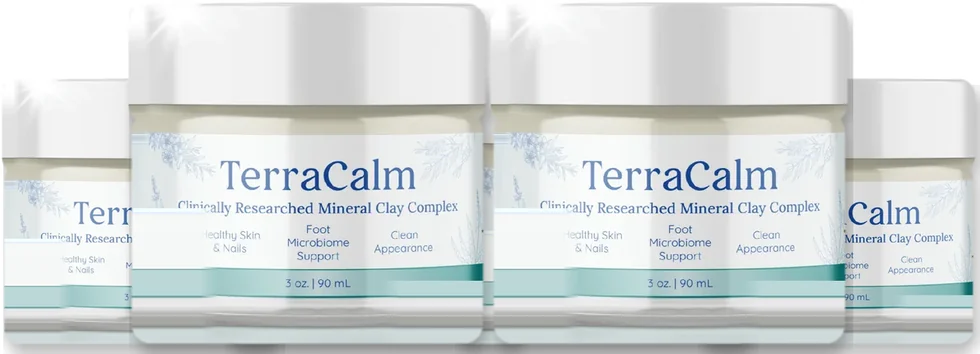
The part of foot care you control every day
A mineral clay for drier, softer, better-smelling feet — sixteen listed ingredients, sold on the manufacturer's own store with a 60-day money-back guarantee. A cosmetic, described as a cosmetic.
Check Availability on the Official Store