Best Pills for Nail Fungus vs Topical Solutions: How They Actually Differ
Quick Answer: Pills or Topicals for a Fungal Nail?
The only pills with strong evidence behind them for a fungal nail are prescription oral antifungals, which reach the nail from the inside as the nail grows out. Capsules sold online as the best pills for nail fungus — biotin, oregano oil, herbal blends — are food supplements rather than medicines, and the evidence that any of them clears a nail infection is thin to absent. Topical products split into two groups that get confused constantly: medicated lacquers, which are regulated drugs, and cosmetic creams and clays, which are for appearance, softness and comfort only.
- Oral prescription medicines: strongest evidence, dispensed after a diagnosis, and some require blood monitoring.
- Oral supplements: no established route to an antifungal effect in a nail; claims outrun the data.
- Topical cosmetics: a grooming category — how feet look and feel, not an infection treatment.

What people mean by the best pills for nail fungus
Search behaviour tells you the question is really two questions wearing one coat. Some people typing the phrase are looking for the prescription medicines a doctor might dispense — terbinafine and itraconazole are the two most commonly used for nails. Others are looking for something they can add to a basket tonight, which in practice means a dietary supplement: biotin, oregano oil softgels, caprylic acid, undecylenic acid, a proprietary blend of botanicals with a confident label.
These two groups sit in completely different regulatory worlds and have completely different amounts of evidence behind them, so lumping them together under one shopping phrase does real damage. A prescription antifungal has been through controlled trials, has an approved indication, has known interactions and known adverse effects, and is dispensed by someone who has looked at your nail. A supplement has been through none of that. It may be perfectly safe. It has simply never been shown to do the job people are buying it for.
That distinction is not pedantry. It is the difference between a product that is allowed to say what it treats and a product that is not allowed to say it — and when a supplement label edges toward treatment language anyway, the label is the thing that has gone wrong, not the regulation.
How an oral antifungal reaches a nail at all
A fungal nail infection does not usually live on the surface where you can see it. It sits in and under the nail plate, in the nail bed and the matrix behind it, feeding on keratin. That location is the whole problem, because it is one of the hardest places in the body for any substance to reach.
An oral antifungal solves the access problem by ignoring the surface entirely. The drug is absorbed from the gut, distributed in the bloodstream, and incorporated into keratin as new nail is formed at the matrix. Terbinafine also binds into the nail plate and persists there for months after the last dose. Nothing is being scrubbed off the top; the new nail simply grows out carrying the drug with it.
This also explains the timeline everyone finds frustrating. A toenail grows roughly one to one and a half millimetres a month, so replacing a whole nail takes the better part of a year, and sometimes longer in older adults or where circulation is poor. Even when a course of medication works exactly as intended, the nail looks unchanged for months, because the visible part is the old damaged plate slowly being pushed forward. People abandon effective treatment constantly for want of that one fact.
The trade-off is systemic exposure. Because these drugs go everywhere in the body, they carry interaction and liver considerations that a cream never has to think about, which is precisely why they are prescription-only and why a clinician may order blood work before or during a course. That is not a reason to avoid them; it is a reason the decision belongs with a professional who can see your history.
Why topical products struggle with the nail plate
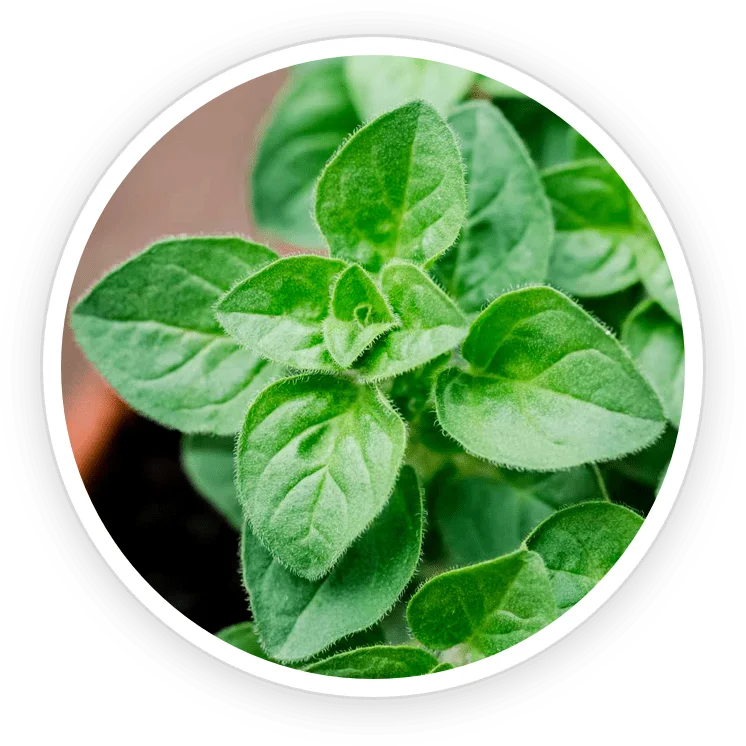
The nail plate is dense, tightly packed keratin, roughly a hundred times thicker than the outer layer of skin, with a low water content and no useful pathway for most molecules. Anything applied to the top has to cross that barrier to reach where the fungus actually lives. Most things do not.
Medicated nail lacquers are engineered around this single obstacle. They use penetration-enhancing solvents, film-forming polymers that hold the active against the plate for hours, and active molecules small enough and lipophilic enough to have a chance of getting through. They are regulated as drugs, they are tested for that indication, and even so their published clearance rates in trials are modest compared with oral therapy, particularly when the infection has reached the matrix or more than half the nail is involved.
Ordinary creams, oils, soaks and clays are not built for that job and do not claim to be. A botanical oil left on the nail surface for a minute has neither the vehicle nor the contact time to matter at depth. When people say a home topical “did nothing for the nail but the skin around it looks a lot better”, they are describing exactly what the physics predicts, and they are describing a real cosmetic benefit that simply is not the same benefit.
Where a mineral foot clay fits
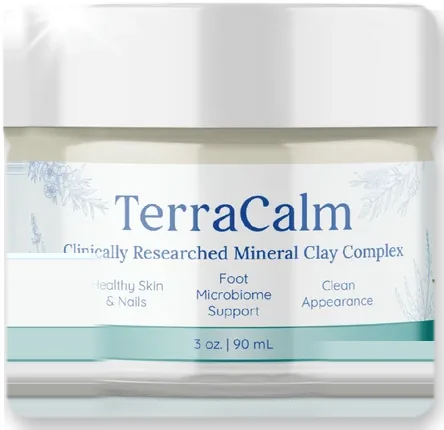
If what you actually want is the grooming half of the job — drier, softer, better-smelling feet — a topical clay is an honest fit. If you want the medical half, that is a clinic visit, not a jar. People comparing the best fungal nail treatment topical options usually need both conversations, in that order.
See the Official TerraCalm OfferOral and topical routes side by side
The table below compares the four things people are actually choosing between. Note that the last column is about strength of evidence, not about how loudly a product is marketed — those two things correlate poorly in this category.
| Option | Route and typical course | Regulatory class | Strength of evidence for nails |
|---|---|---|---|
| Oral terbinafine | Daily tablet, commonly 12 weeks for toenails; nail grows out over 9–12 months | Prescription medicine | Strong — multiple controlled trials |
| Oral itraconazole | Daily or pulsed dosing over several months, as prescribed | Prescription medicine | Strong — multiple controlled trials |
| Medicated nail lacquer | Applied to the nail daily for up to 48 weeks | Regulated drug (Rx or OTC by market) | Moderate — works, but clearance rates are lower than oral |
| Oral supplement capsules | Daily capsule, indefinite | Dietary supplement | Weak to absent for nail infection specifically |
| Tea tree or botanical oil | Applied to the nail and skin, twice daily | Cosmetic, unless drug claims are made | Limited — small, mixed, mostly dated studies |
| Cosmetic mineral clay | Applied to feet as a grooming step | Cosmetic | Not applicable — appearance and comfort only |
What the supplement aisle is actually selling
Three ingredients dominate the capsules marketed at nails, and each deserves a straight answer.
Biotin. The nail research on biotin is about brittleness, not infection, and it is old, small and uncontrolled by modern standards. Biotin deficiency is genuinely rare in people eating an ordinary diet. There is also a practical catch worth knowing: high-dose biotin interferes with a number of common laboratory immunoassays, including some thyroid and cardiac tests, which is why the FDA has issued safety communications about it. Tell whoever draws your blood if you take it.
Oregano oil and other volatile-oil capsules. Carvacrol and thymol have real antifungal activity in laboratory conditions. That finding is reproducible and it is also where the story stops, because nothing establishes that swallowing a softgel produces a meaningful concentration of those compounds inside human nail keratin. Laboratory activity is a reason to run a trial, not a substitute for having run one. Volatile oils in capsules can also cause reflux and gastric irritation.
Proprietary blends. When a label lists a blend with a single combined milligram figure, you cannot tell how much of anything is in it. That is not a small print problem — it makes the product impossible to assess even in principle, and it is the single clearest signal to be sceptical of a supplement's claims.
Laboratory activity against a fungus in a dish tells you a molecule is interesting. It does not tell you the molecule ever reaches a human nail, in a useful amount, for a useful length of time. Almost every overclaim in this category lives in the gap between those two sentences.

How a cosmetic clay differs from all of the above
A mineral clay for the feet is not competing with any of this, and it is worth saying plainly. TerraCalm is a topical cosmetic — French green clay with shea butter, jojoba, aloe, manuka honey, menthol and several essential oils in a jar you rub on. What a formula like that can do is absorb surface moisture, soften rough skin and calluses around the nail, and leave feet smelling and looking better. Those are cosmetic outcomes and they are worth having on their own terms.
What it cannot do is treat an infection, and nothing on this site will say otherwise, because a cosmetic that claims to treat a disease has legally become an unapproved drug. If you are weighing where to buy nail fungus treatment products of any kind, the first thing to sort out is which of these three categories you are actually shopping in — medicine, medicated topical, or grooming — because they answer different questions and the packaging often blurs them deliberately.
One practical caution on the cosmetic side: potent essential oils are the part of a botanical foot formula most likely to irritate, and concentration is the number that decides it. We looked at the safe upper limits in detail in our guide to essential oil dilution limits for foot care, and the short version is that more is not better and undiluted is not a strategy.
What none of this can do
Here is the honest ledger, because it is more useful than a sales pitch.
No pill and no topical, prescription or otherwise, restores a nail that has already been destroyed. They act on the fungus or on the surrounding skin; the visibly damaged plate has to grow out and be replaced, and that takes as long as it takes. If the matrix has been permanently scarred, the new nail may never look the way it did.
Nothing prevents reinfection on its own either. Fungi live in shoes, in damp bathroom floors, in gym changing rooms and in the nail clippers you keep using. Recurrence after successful treatment is common, and the boring measures — drying properly between the toes, rotating footwear, not sharing tools, treating the skin as well as the nail — do more of the work than most people expect.
And no product can tell you what you have. Roughly half of abnormal-looking nails turn out not to be fungal at all: psoriasis, trauma from footwear, lichen planus and other conditions look strikingly similar. Buying the best nail fungus treatment for a nail that is not infected wastes months. A clinician can confirm with a clipping and a simple laboratory test, and that single step changes what the right answer is.
Finally, be sceptical of any timeline promised in weeks. Nail biology sets the clock, and the clock is slow. Anything advertising a fast visible fix for a nail is selling against physiology.
Medical note: if you have diabetes, peripheral neuropathy, poor circulation, a suppressed immune system, or any break in the skin of your feet, foot problems are a clinical matter and not a shopping decision. See a clinician before applying or swallowing anything new.
Frequently asked questions
Are the best pills for nail fungus available over the counter?
No. In the United States and most comparable markets, oral antifungal medicines are prescription-only, because they are processed by the liver and can interact with other drugs. Capsules sold over the counter for nails are food supplements rather than medicines, and a supplement is not permitted to be marketed as a treatment for an infection.
Do biotin capsules clear a fungal nail?
There is no good evidence that they do. Biotin has been studied mainly for brittle nails, in small and dated work, and brittleness is a different problem from a fungal infection. Biotin also interferes with several common laboratory blood tests, so tell your clinician if you take it.
Why do topical products struggle to reach a nail infection?
The nail plate is dense keratin, roughly a hundred times thicker than the outer layer of skin and with no route for most molecules to pass through. An infection typically sits under the plate in the nail bed, which is why medicated lacquers are designed specifically to penetrate keratin and why ordinary creams do not get there.
Where does a cosmetic clay such as TerraCalm fit in?
It is a cosmetic, so it sits with grooming rather than with medicine. A clay-based topical can absorb surface moisture, soften rough skin around the nail and make feet look and smell better. It is not a treatment for any infection, and no cosmetic may lawfully be sold as one.
Scientific references
The grooming half of the job
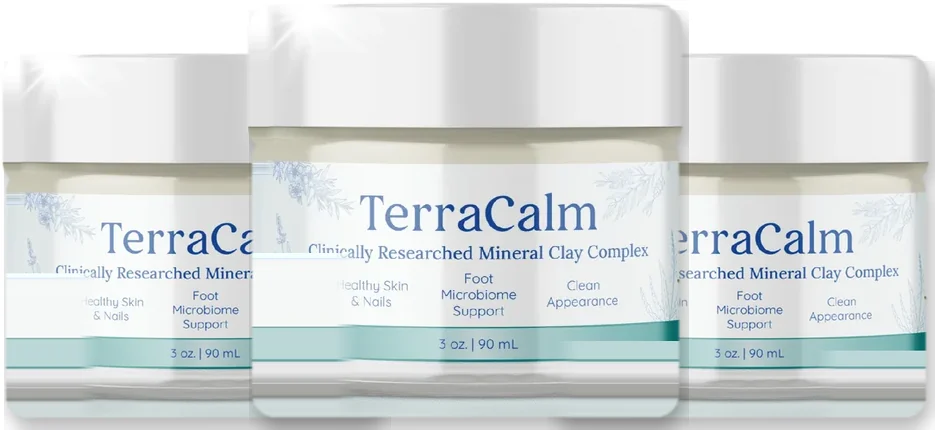
TerraCalm is a mineral clay for drier, softer, better-smelling feet — a cosmetic, sold on the manufacturer's own store with a 60-day money-back guarantee. Sixteen listed ingredients, and an honest account of which of them do what.
Check Availability on the Official Store