TerraCalm 2026: Does It Really Work?
Quick Answer: Do TerraCalm reviews show it really works?
TerraCalm reviews are broadly positive on the things a cosmetic can honestly influence — foot odour, softer skin around the nail and a tidier look — usually within a few weeks of twice-daily use. What no review can establish is a cure for nail fungus, because TerraCalm is a grooming clay, not a medicine, and no trial exists on the finished formula. Buy it as a cosmetic, judge it as one, and lean on the 60-day guarantee.
- What holds up: comfort, smell and appearance improvements reported in weeks.
- What does not: any claim to treat or cure a fungal nail infection.
- Low-risk trial: $49 a jar, 60-day money-back guarantee through the official store.
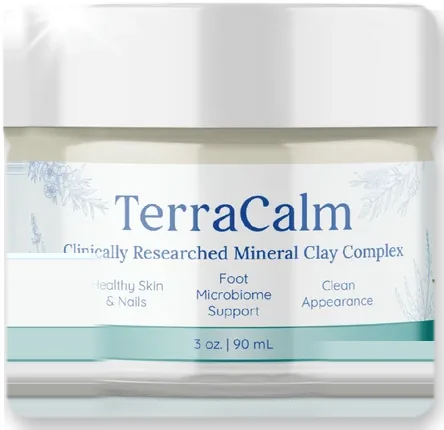
If you have spent an evening reading TerraCalm reviews, you have probably noticed the whiplash: one page swears it cleared a decade-old nail problem in a fortnight, the next calls it snake oil, and almost none of them tell you what the product legally is. This review does the boring, useful thing instead. It separates what a mineral-clay foot cosmetic can actually deliver from what the marketing hints at, weighs the real user reports against the fact that there is no clinical trial on the finished cream, and tells you who it is reasonable for and who should close the tab and phone a clinician.
The short version is that TerraCalm is a competent grooming product wearing a category that invites overpromising. Read it as a foot-care cosmetic and it mostly delivers. Read it as a nail-fungus treatment and it cannot, because no cosmetic is allowed to be one.
What TerraCalm actually is
TerraCalm is a topical cream you rub into the toenails and surrounding skin twice a day. The formula is built around French green clay — a mineral clay prized in skincare for absorbing surface oil and moisture — and layers in sixteen listed active ingredients in total, including a set of six essential oils (tea tree, clove and oregano among them) alongside emollients such as shea butter and jojoba, plus aloe, manuka honey and a cooling hit of menthol. It is sold in a small jar, typically at $49 for a single unit, with cheaper per-jar pricing on multi-jar bundles and a 60-day money-back guarantee through the official store.
Two things matter for any honest review. First, it is a cosmetic, not a supplement and not a drug, which sets a hard ceiling on what it may claim. Second, the ingredient list is genuinely reasonable for a foot cosmetic: clay to manage moisture, oils with a plausible role in odour and skin comfort, and emollients to soften the rough, cracked skin that so often accompanies a neglected toenail. If you want the full breakdown of what each component is doing, our TerraCalm ingredients breakdown of French green clay and six essential oils goes component by component.
What TerraCalm reviews actually report
Strip away the two extremes — the miracle testimonials and the reflexive scam accusations — and a consistent middle emerges. The most common positive reports cluster around three things, and notably they are the three things a clay-and-oil cosmetic is genuinely capable of affecting.
Odour. This is the single most repeated win. People describe feet that smell markedly fresher within one to two weeks, which is exactly what you would expect from a formula that absorbs surface moisture and carries aromatic oils. Odour is a surface phenomenon; clay and essential oils act on the surface; the timeline and the mechanism line up.
Skin softness and comfort. The second cluster is about the skin, not the nail: softer skin around the nail fold, fewer rough patches and calluses, less of the tight, dry feeling that cracked heels and toes produce. Shea butter, jojoba and aloe are emollients doing emollient work. The menthol adds a cooling sensation many reviewers describe as soothing after a long day on their feet.
Appearance over time. The third cluster is slower and more cautious in the honest reviews: the nail looking tidier and less ragged over a span of months. This is where expectations need managing hardest, and we will come back to why.
The negative reviews are just as informative. The most credible complaints are that it did nothing visible for the nail itself, that the scent is stronger than expected, or that a small number of users found the essential oils irritating. None of those are surprising, and the last one is a real reason to patch-test first if you have sensitive skin.

Want to try it on the low-risk terms reviewers recommend?
The consensus across sensible TerraCalm reviews is the same: buy one jar from the official store, give it a fair few weeks as a grooming step, and use the 60-day money-back guarantee if it does not earn its place. That only works when you buy direct.
See the Official TerraCalm OfferThe evidence gap every honest TerraCalm review has to name
Here is the part most review pages skip. There is no published, independent clinical trial on the finished TerraCalm cream. That is not a smear; it is simply true, and it is true of most cosmetics, which are not required to run trials the way medicines are. What exists instead is ingredient-level evidence, and it is worth being precise about what that does and does not prove.
Several of TerraCalm's essential oils — tea tree, clove and oregano especially — do show antifungal activity in laboratory studies. Carvacrol from oregano, eugenol from clove and terpinen-4-ol from tea tree can inhibit fungal growth in a dish. That research is real and reproducible. But laboratory activity is the beginning of a story, not the end of it. It tells you a molecule is interesting; it does not tell you that the molecule, at the concentration used in a cosmetic cream, applied to the outside of a dense nail plate, reaches an infection living underneath in a meaningful amount. The nail is one of the hardest barriers in the body to cross, which is precisely why medicated lacquers are engineered specifically to penetrate keratin and ordinary creams are not.
So the honest evidentiary position is layered: promising ingredients, no proof on the finished product, and a delivery challenge that no cosmetic is built to solve. That is enough to justify TerraCalm as a grooming clay. It is not enough to justify it as a treatment, and anyone selling it as the latter has left the evidence behind.
Does TerraCalm really work? Three myths the reviews keep repeating
Myth one: “It cured my fungus in two weeks.” Nail biology makes this physically implausible. A toenail grows roughly one to one and a half millimetres a month, so a full nail takes about nine to twelve months to replace. Anything that changed the visible nail in two weeks changed the skin and the odour around it, not the nail plate itself. The two-week wins are real; they are just being mislabelled.
Myth two: “It is a scam because it is not a drug.” This flips the error the other way. TerraCalm never has to be a drug to be worth buying. Plenty of good cosmetics improve how feet look, feel and smell without treating any disease, and that is a legitimate thing to spend $49 on. The scam framing usually comes from reviewers who expected a medicine and were sold a cosmetic — a marketing problem, not a product that does not exist.
Myth three: “Natural means it works.” Natural means nothing about efficacy. Oregano oil is natural and irritant; terbinafine is synthetic and effective. The value of TerraCalm's botanicals is in comfort, scent and skin feel, and that value stands on its own without borrowing credibility from the word natural.
The fairest one-line verdict on TerraCalm: it works about as well as a well-made foot cosmetic should, and not one step further. The disappointment in the harsh reviews is almost always the gap between what a clay can do and what the buyer hoped a medicine would.
What the reported timeline really looks like
Because the “how long” question drives so many purchases, here is the realistic sequence pieced together from the more sober reviews, mapped against what is biologically possible.
| Window | What users commonly report | Plausible mechanism |
|---|---|---|
| Days 1–7 | Feet smell fresher; cooling, soothed sensation | Surface odour control; menthol; moisture absorption |
| Weeks 2–4 | Softer skin, fewer rough patches around the nail | Emollients (shea, jojoba, aloe) on the surrounding skin |
| Months 2–4 | Nail edges look tidier; grooming easier | Healthier surrounding skin; slow new-nail growth begins to show |
| Months 6–12 | Overall neater appearance as the nail grows out | Nail replacement cycle; unrelated to any cosmetic curing an infection |
The pattern is the tell. Fast changes are surface changes; anything involving the nail plate itself is slow because the nail sets the clock. A review promising a rapid nail transformation is arguing against physiology, and physiology wins.
Who TerraCalm is reasonable for — and who should not rely on it
It is a sensible buy if what you actually want is the grooming half of foot care: fresher-smelling, softer, better-maintained feet, and a pleasant twice-daily ritual you will genuinely keep up. Early cosmetic dissatisfaction with how your feet look and feel is squarely in its lane. If you are comparing formats before you commit, our look at how TerraCalm compares with Kerassentials for daily nail care is the next thing to read.
It is the wrong tool if you have a confirmed or suspected fungal infection, and especially if you have diabetes, poor circulation, neuropathy or a weakened immune system. Those situations are medical, and roughly half of abnormal-looking nails are not fungal at all — psoriasis, trauma and other conditions mimic it closely — so a clinician's clipping and lab test can save you months of applying the wrong thing. A cosmetic sits alongside medical care as grooming; it does not replace it.
Medical note: if you have diabetes, peripheral neuropathy, poor circulation, a suppressed immune system, or any break in the skin of your feet, foot problems are a clinical matter and not a shopping decision. See a clinician before applying anything new, and stop use if irritation develops.
Frequently asked questions
Does TerraCalm really work for toenail fungus?
TerraCalm is a cosmetic, so it is not a treatment for toenail fungus and cannot be sold as one. What owners consistently report is grooming value: less foot odour, softer skin around the nail and a tidier look. Several of its essential oils have antifungal activity in laboratory tests, but there is no trial on the finished cream, and a confirmed infection is a medical matter for a clinician.
How long before TerraCalm shows results?
User reports describe surface changes such as reduced odour and softer skin within a couple of weeks of twice-daily use. Anything to do with the nail plate itself is governed by growth, and a toenail takes roughly nine to twelve months to grow out fully, so appearance changes on the nail are slow no matter what you apply.
Is TerraCalm a scam or legit?
It is a real cosmetic product sold from an official store, made in an FDA-registered, GMP-certified facility, with a 60-day money-back guarantee. The legitimate criticism is not that it does not exist but that some marketing implies more than a cosmetic can deliver. Judge it as a grooming clay, buy through the official store, and use the guarantee if it disappoints.
Does TerraCalm come with a money-back guarantee?
Yes. The manufacturer lists a 60-day money-back guarantee on purchases made through the official store. That window only reliably applies when you buy directly, which is one practical reason to avoid third-party marketplace resellers whose returns are handled separately.
Related reading
Scientific references
Ready to judge TerraCalm for yourself?
A mineral clay for drier, softer, better-smelling feet — sixteen listed ingredients, sold on the manufacturer's own store with a 60-day money-back guarantee. A cosmetic, described honestly as a cosmetic. Try one jar, keep it if it earns its place.
Check Availability on the Official Store