TerraCalm Ingredients: What's Inside the 16-Ingredient Clay Formula
Quick Answer: What Are the TerraCalm Ingredients?
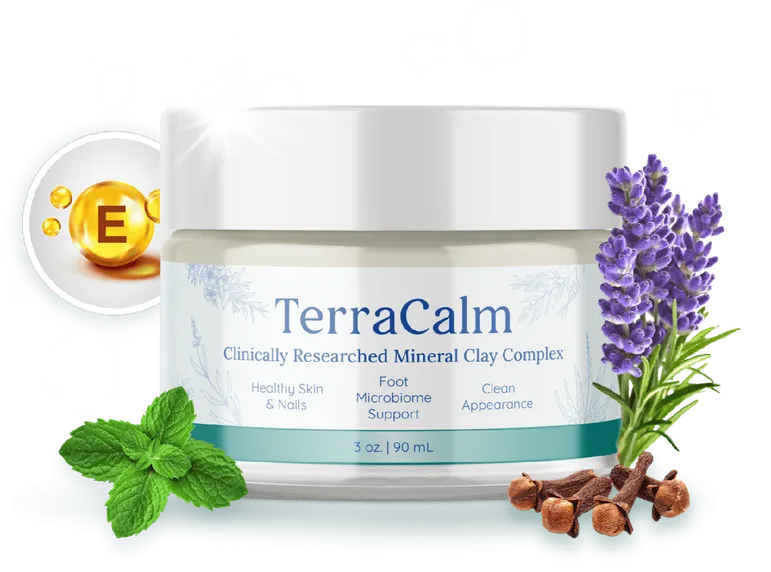
The TerraCalm ingredients are a French green clay base plus six essential oils — thyme, oregano, cedarwood, tea tree, clove and lavender — and conditioning botanicals: manuka honey, bearberry extract, vitamin E, aloe vera, shea butter, sweet almond oil, sunflower oil and menthol. Sixteen in all, with no published concentrations, in a cosmetic clay for the feet.
- Base: mineral French green clay that absorbs surface moisture.
- Essential oils: the six botanicals with laboratory antifungal activity.
- Conditioners: honey, aloe, shea and plant oils for softness and comfort.
Why the TerraCalm ingredients list is worth reading closely
Most people never read past a product's headline claims, which is a shame, because the TerraCalm ingredients list is where the honest story lives. This is a cosmetic mineral clay for the feet, and its label names 16 things: a clay base, six essential oils, and a set of conditioning botanicals. Read carefully, that list separates neatly into two jobs — the constituents that have some laboratory antifungal activity, and the constituents that are there to condition, soften and soothe skin. Knowing which is which is the difference between realistic expectations and disappointment.
One caveat sits over the whole discussion. Cosmetics are not required to publish concentrations, and TerraCalm does not, so we can tell you what is in the jar but not how much. That matters, because with essential oils the dose is the entire story: the same oil that is soothing at a fraction of a percent can irritate at higher strength. We will keep coming back to that point, because it is the one that actually protects your skin.
The base: French green clay
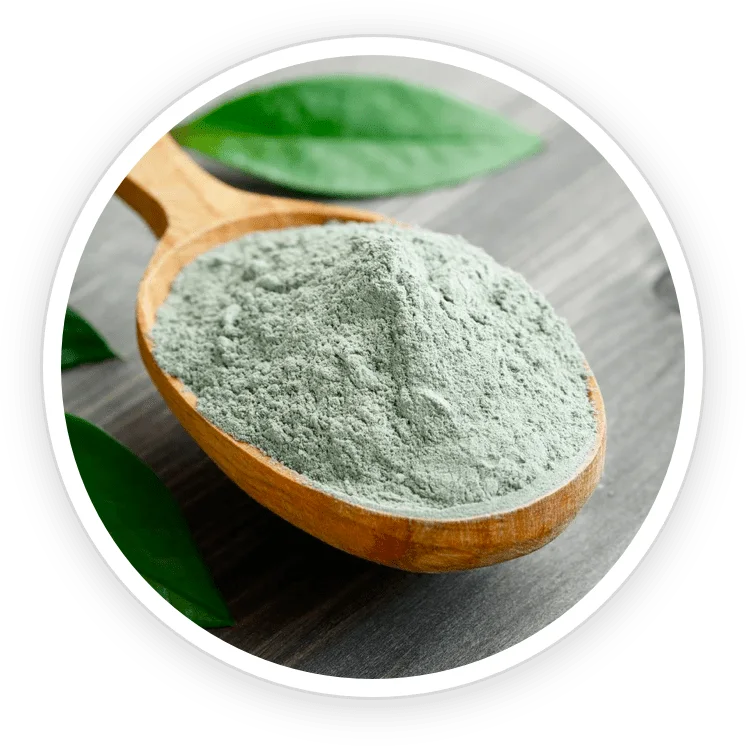
Everything in TerraCalm is carried in French green clay, an absorbent mineral clay (illite and montmorillonite) that has been used in skincare for a long time. Its useful property on feet is simple and physical: it draws up surface moisture and oil. Damp, warm skin between the toes is uncomfortable and it is exactly the environment fungi and odour-causing bacteria prefer, so a clay that leaves the surface drier and cleaner-feeling is doing something real — a grooming benefit, not a medical one. We go deeper into the mineral itself in our explainer on what French green clay actually does on skin, which is a good companion to this page.
It is worth being precise about the ceiling here. Clay manages the surface. It cannot reach under the nail plate where a fungal infection lives, and it makes no claim to. As a base, its job is to hold the rest of the formula against the skin, absorb excess moisture, and leave feet feeling fresh.
The six essential oils: the "active" botanicals
These are the ingredients people mean when they ask which part of the formula "fights fungus". Six essential oils are listed, and each has a laboratory profile worth stating plainly — alongside the limit that laboratory activity is not the same as a proven effect inside a human nail.
Tea tree oil is the best-studied of the group. In one small clinical study it performed comparably to clotrimazole for surface improvement in nail infection, which is genuinely more than most botanicals can claim, even though it did not reliably cure. It is a recognised contact allergen for some people, which is why it is used at low dilution. Our companion piece on the benefits and limits of tea tree oil for nail fungus covers the evidence in full.
Oregano oil owes its reputation to carvacrol, a compound with well-documented antifungal activity in vitro. That finding is real and reproducible in a dish; it is also where the evidence stops, because nothing establishes that a topical dab of oregano oil reaches meaningful concentrations inside nail keratin. It is also one of the more irritating oils, so concentration matters especially here.
Thyme oil (thymol), clove oil (eugenol), cedarwood oil and lavender oil round out the six. Thymol and eugenol both show antifungal and antibacterial activity in laboratory conditions; cedarwood contributes a woody scent and traditional use; lavender adds fragrance and is among the gentler of the group. Across all six, the honest summary is the same: interesting in a dish, unproven in a nail, and valuable in a cosmetic mainly for scent, freshness and the antibacterial edge that keeps a product and the skin surface pleasant.
See the full label for yourself
If you want to read every one of the 16 ingredients on the manufacturer's own product page and check the current price and guarantee, the official store is the place to do it — TerraCalm ships with a 60-day money-back guarantee.
See the Official TerraCalm OfferThe conditioning and soothing botanicals
The remaining ingredients are not there to fight anything. They are conditioners and soothers, and in a foot cosmetic they arguably do the most visible day-to-day work — the softer skin and calmer feel people actually notice.
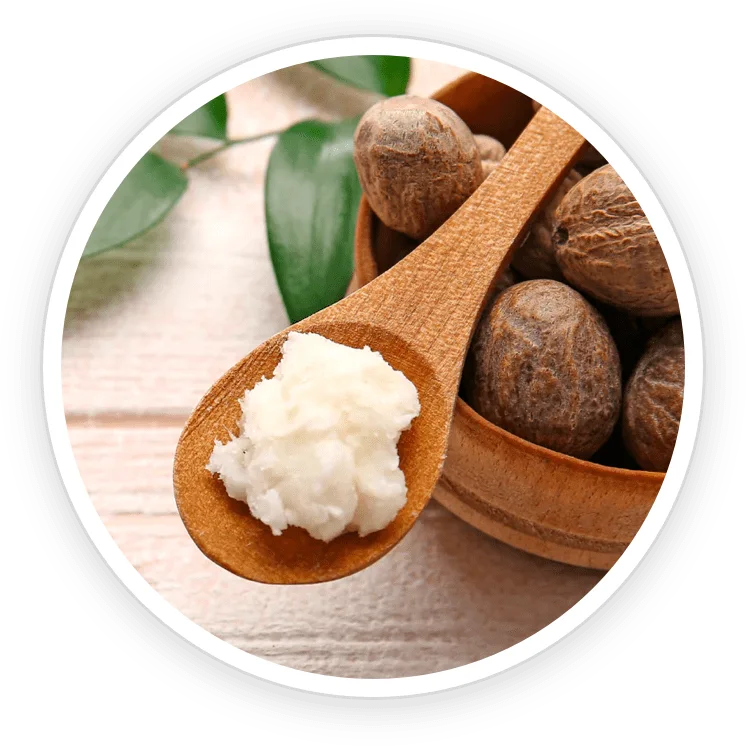
Shea butter and sweet almond oil are rich emollients that soften rough skin and calluses around the nail. Sunflower oil is a light carrier oil that also supports the skin barrier. Aloe vera is a classic soother for skin that feels dry or irritated. Manuka honey is a humectant with mild antibacterial properties and a long cosmetic history. Vitamin E (tocopherol) is an antioxidant that also helps stabilise the oils in the jar. Bearberry extract contains arbutin, used in skincare mainly for brightening the look of skin. And menthol supplies the cooling, fresh sensation that makes the product feel active on application — a sensory effect, worth naming honestly as such.
Together this group is why a session with the clay leaves feet feeling smoother and more comfortable. None of it treats an infection; all of it contributes to the grooming outcome the product is honestly sold for.
Is TerraCalm all natural? A careful answer
By sourcing, yes: clay is a mineral, the oils and extracts are plant-derived, and honey is a bee product, so the formula reads as naturally sourced with no obvious synthetic actives. But "natural" is a description of where an ingredient comes from, not a promise about how it behaves on skin. Poison ivy is natural; so is a nut allergen. Some of the most irritating substances in cosmetics are entirely natural essential oils. So the correct reading is: naturally sourced, and still requiring the same respect for dose and sensitivity you would give any active botanical.
This is exactly why concentration is the number that matters most and the one the label does not give. Essential oils have recognised safe upper limits for leave-on skin products, and going over them is the fast route to irritation. We set out those thresholds in detail in our guide to essential oil dilution limits for foot care, and the short version is that with these oils more is not better.
Allergens and who should patch-test
Three flags are worth raising before anyone rubs this on. Sweet almond oil is a tree-nut derivative, so anyone with a nut allergy should be cautious. Manuka honey is a bee product, relevant if you react to bee-derived ingredients. And several of the essential oils — tea tree, clove, oregano and lavender in particular — are recognised contact allergens that cause dermatitis in a minority of users. None of this makes the formula unsafe for most people; it makes a patch test sensible. Apply a small amount to the inside of the forearm, wait 24 to 48 hours, and only continue if there is no redness, itching or rash. If you have sensitive or broken skin, that step is not optional.
A long, natural-sounding ingredient list is a starting point, not a verdict. What decides whether a botanical formula helps or irritates is the concentration of each oil — the one number cosmetic labels are not required to print.
Setting realistic expectations for the formula
Put the pieces together and the formula tells an honest, coherent story. The clay base manages surface moisture. The conditioning botanicals soften and soothe. The essential oils keep things fresh and carry laboratory antifungal activity that is interesting but unproven inside a nail. That combination makes a genuinely nice grooming product for drier, softer, better-smelling feet.
What it is not, and cannot be sold as, is a treatment for a fungal infection. A cosmetic that claimed to treat a disease would legally become an unapproved drug, and no honest reading of these 16 ingredients supports a cure claim. If you approach TerraCalm as care for the skin around the nail — the grooming half of the job — the formula makes sense and the expectations are fair. If you approach it as medicine, you will be let down, and the label never promised otherwise.
Medical note: if you have diabetes, peripheral neuropathy, poor circulation, a suppressed immune system, or any break in the skin of your feet, foot problems are a clinical matter and not a shopping decision. Speak to a clinician before applying anything new, and patch-test first if you have sensitive skin or any nut or bee-product allergy.
Frequently asked questions
What are the ingredients in TerraCalm?
TerraCalm lists 16 ingredients built on a French green clay base: six essential oils (thyme, oregano, cedarwood, tea tree, clove and lavender) plus manuka honey, bearberry extract, vitamin E, aloe vera, shea butter, sweet almond oil, sunflower oil and menthol. No concentrations are published for any of them, so the list tells you what is inside but not how much.
Is TerraCalm all natural?
The listed ingredients are plant-, mineral- and bee-derived, so the formula reads as naturally sourced. Natural, however, is a sourcing description, not a safety guarantee. Potent essential oils and botanical extracts can still irritate skin or trigger allergies, so natural should never be read as automatically gentle for everyone.
Which TerraCalm ingredient fights fungus?
The six essential oils are the constituents with laboratory antifungal activity: tea tree oil performed comparably to clotrimazole in one small study, and oregano's carvacrol shows antifungal activity in vitro. Laboratory activity is not proof of an effect inside a human nail, and TerraCalm is sold as a cosmetic, not as a treatment for infection.
Are there common allergens in TerraCalm?
Yes, several. Sweet almond oil is a tree-nut derivative, manuka honey is a bee product, and essential oils such as tea tree, clove, oregano and lavender are recognised contact allergens for some people. Anyone with a nut or bee-product allergy, or sensitive skin, should read the label and patch-test on a small area first.
Scientific references
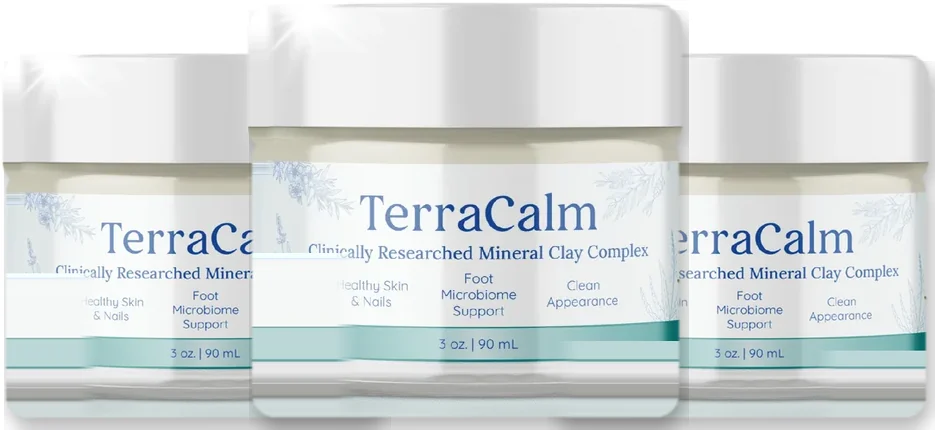
A grooming formula, honestly described
TerraCalm is a mineral clay for drier, softer, better-smelling feet — a cosmetic, sold on the manufacturer's own store with a 60-day money-back guarantee. Sixteen listed ingredients, and an honest account of which of them do what.
Check Availability on the Official Store