Tea Tree Oil for Nail Fungus: Benefits, Evidence and Safe Use
Quick Answer: Does Tea Tree Oil for Nail Fungus Actually Help?
Tea tree oil is one of the more evidence-backed botanicals for nails: small studies found it performed comparably to the antifungal clotrimazole for nail appearance and symptoms. It must be diluted in a carrier oil to avoid irritation, patch tested first, and used daily for months. It is a supportive ingredient, not a guaranteed cure.
- Backed by research: performed comparably to clotrimazole in small clinical trials.
- Never neat: dilute in a carrier oil and patch test to avoid skin irritation.
- One of six: tea tree is among TerraCalm's essential oils, pre-blended into a clay base.

Of all the home remedies people reach for, few have as much genuine research behind them as tea tree oil for nail fungus. It is not folklore dressed up as science — it is a plant oil with measurable antifungal activity in the laboratory and a handful of real clinical trials to its name. That puts it in a different category from most kitchen-cabinet cures. But “better evidence than the alternatives” is not the same as “proven treatment,” and the gap between those two statements is exactly where people get misled.
This article does the honest version. We will look at what the studies on tea tree oil actually found, including the well-known comparison against clotrimazole; why dilution and a carrier oil are non-negotiable on the skin of your feet; and how a botanical like this behaves when it is one ingredient inside a formulated clay rather than a bottle you dose yourself. No hype, no cure claims — just what the ingredient can and cannot reasonably offer.
What the research says about tea tree oil for nail fungus
Tea tree oil, distilled from Melaleuca alternifolia, owes its activity largely to a compound called terpinen-4-ol. In test-tube studies it disrupts the cell membranes of a broad range of fungi and bacteria, which is why it turns up in so many antiseptic and foot products. Laboratory activity is encouraging, but it is not the same as clearing an infection on a living nail, so the trials matter more than the petri dishes.
The most-cited human study is a double-blind trial that compared 100% tea tree oil against 1% clotrimazole solution — a standard over-the-counter antifungal — applied twice daily to fungal toenails for six months. At the end, the two groups showed broadly comparable improvement in nail appearance and in laboratory clearance, and a majority in each group reported the nail looking better. Later work combining tea tree oil with other agents in a cream also reported improvement. That comparison — a plant oil holding its own against a recognised antifungal — is why tea tree oil earns a serious mention rather than a dismissive one.
Now the honest caveats, because they are the whole point. These trials were small, some were older, and the results across the literature are mixed rather than unanimous. Tea tree oil is not approved by the FDA as a treatment for onychomycosis. And like every topical, it can only act on the surface it physically reaches — a thick, dense nail plate is a formidable barrier, which is part of why any topical is a months-long commitment. The fair summary is this: promising, better-evidenced than most botanicals, and still not a substitute for medical treatment of a confirmed infection.
Why dilution is non-negotiable
Here is where enthusiasm quietly becomes a rash. Tea tree oil is potent, and applied neat to the skin it commonly causes irritation, redness, dryness or full contact dermatitis. The trial that used 100% tea tree oil reported irritation in a meaningful share of participants precisely because it was undiluted. For everyday home use, undiluted essential oil on skin is the wrong move — and on already-compromised skin around a damaged nail, it is a worse one.
The fix is a carrier oil. Blending a few drops of tea tree oil into a neutral base such as jojoba, coconut or sweet almond oil brings the concentration down to a skin-friendly level while still delivering the active compound. A patch test on a small area, twenty-four hours before wider use, tells you whether your skin tolerates it. This is not fussiness — it is the difference between a routine you can keep up and one you abandon after your foot flares. We go deep on the numbers in our guide to essential oil dilution limits for foot care, and it is worth reading before you mix anything yourself.
How tea tree oil fits inside a clay cream
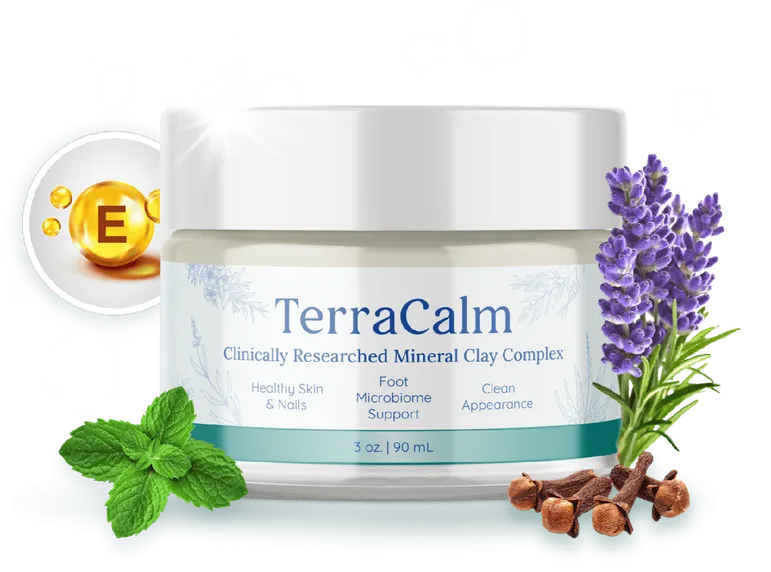
All of the above is why buying a bottle of neat essential oil and eyeballing your own dilution is the fiddly, error-prone path. It is also why a formulated product exists. In TerraCalm mineral foot clay, tea tree oil is one of six essential oils blended into a French green clay base alongside shea butter, jojoba, aloe, manuka honey and menthol. The concentration work has already been done: the oil sits within a carrier-rich formula rather than being dropped straight onto your skin, so the irritation risk that comes with neat application is designed out.
A word on what that does and does not mean, because we are careful here. TerraCalm is a cosmetic, not a drug. We are not claiming it treats or cures nail fungus — a cosmetic cannot make that claim, and we will not pretend otherwise. What it offers is a grooming product for the feet: absorbent clay for the sweatiest skin on the body, softening butters and oils, and a botanical blend that includes one of the more-studied topical oils. If you want the full breakdown of every component, our article on the TerraCalm ingredients and what makes the formula work walks through each one honestly.
Tea tree oil, already blended so you don't have to measure drops
Skip the guesswork of home dilution. TerraCalm blends tea tree with five other essential oils inside a carrier-rich French green clay base — a cosmetic grooming step for drier, softer, better-smelling feet, sold on the official store with a 60-day money-back guarantee.
See the Official TerraCalm OfferThree myths about tea tree oil, corrected
Myth 1: “If a little works, neat is stronger and better.” The opposite is true. Undiluted tea tree oil is the version most likely to burn, redden and irritate your skin, which forces you to stop using it — so “stronger” often means “less consistent,” and consistency is what actually matters over a nail's growth cycle. Diluted and daily beats neat and abandoned every time.
Myth 2: “Natural means safe.” Natural and safe are unrelated words. Tea tree oil is a common cause of allergic contact dermatitis, oxidised (old) oil is more sensitising than fresh, and it is genuinely toxic to cats and dogs, so a bottle left on a bathroom shelf is a pet hazard. A patch test and sensible storage are the price of using a potent botanical.
Myth 3: “It will work in a week or two.” No topical outruns nail growth. The studies that showed benefit ran their applications daily for six months, and the visible payoff in the nail always lags behind because you are waiting on new growth. If you want the full month-by-month picture, our toenail fungus timeline of what to expect sets honest expectations.
The other oils tea tree works beside
Part of the logic of a blend is that several botanicals bring overlapping and complementary properties. In TerraCalm, tea tree sits alongside oils traditionally valued in foot care: lavender for its calming scent and skin-soothing reputation, clove and its warming aromatic profile, cedarwood, and menthol for that clean cooling sensation people associate with fresh feet. None of these is a magic bullet, and we are not going to inflate them into one — but a formulated combination in a carrier base is a more sensible way to use potent oils than a shelf full of separate bottles you dilute by hand.
The absorbent French green clay is the base that ties it together. Clay's practical appeal on feet is simple and real: feet sweat more than any other skin, and a mineral that draws moisture and holds it makes for a drier, less odorous foot environment. That is a modest cosmetic benefit stated plainly, which is how every claim on this site is meant to read.
How to use tea tree oil safely, step by step
If you do choose to use tea tree oil on its own rather than in a finished product, a simple, cautious routine keeps it useful and low-risk:
- Dilute first. A few drops of tea tree oil per teaspoon of carrier oil (jojoba, coconut or sweet almond) is a sensible starting range for most skin.
- Patch test. Apply the diluted blend to a small area of the inner forearm and wait twenty-four hours. No redness or itching means you are likely fine to proceed.
- Prep the nail. Wash and dry the foot thoroughly, trim and gently file the nail so the oil can reach as much surface as possible.
- Apply daily. Rub the blend into the nail, the nail edges and the surrounding skin once or twice a day, and commit to months rather than weeks.
- Stop if it reacts. Any rash, burning or persistent redness means discontinue and, if it does not settle, see a clinician.
- Store and separate. Keep the bottle capped, away from light and heat, and well out of reach of pets and children.
If measuring drops sounds like more than you will realistically keep up, that is the honest argument for a pre-blended product, and our guide to applying nail clay for best results shows the simpler daily version of the same habit.
Tea tree oil deserves its reputation as the best-studied botanical in foot care — and it also deserves the caveats. Diluted, applied daily, given months, and kept in its lane as a supportive ingredient rather than a cure, it is a reasonable part of a routine. Neat, rushed, or treated as a replacement for medical care, it is a rash waiting to happen.
Safety note: tea tree oil must be diluted before skin contact and is not safe to swallow. It is toxic to cats and dogs. Do a patch test, avoid broken skin, and speak to a doctor before use if you are pregnant, nursing, or have sensitive or allergic skin. A confirmed fungal nail infection is a medical matter — if there is pain, spread or no improvement after months of consistent care, see a healthcare professional.
Frequently asked questions
Does tea tree oil kill toenail fungus?
Laboratory and small clinical studies show tea tree oil has genuine antifungal activity, and some trials found it performed comparably to clotrimazole, a common over-the-counter antifungal, for improving nail appearance and symptoms. That said, the evidence is limited and mixed, tea tree oil is not an approved treatment for nail fungus, and it acts on the surface it can reach rather than deep within a thickened nail. Treat it as a promising botanical, not a cure.
How do you use tea tree oil for nail fungus?
Tea tree oil should never be applied undiluted to the skin. Blend a few drops into a carrier oil such as jojoba or coconut oil, patch test on a small area first, and apply to clean, dry nails and the surrounding skin. In a finished product like TerraCalm it already sits within a formulated clay base alongside carrier oils, so you are not measuring drops yourself. Consistency matters far more than concentration.
Is tea tree oil safe to use on feet?
For most people, properly diluted tea tree oil is well tolerated on the feet, which are relatively tough skin. Undiluted, it commonly causes irritation, redness or contact dermatitis, so dilution and a patch test are essential. Stop if you develop a rash, avoid broken skin, and speak to a doctor before use if you are pregnant, nursing, or have sensitive skin. Keep it away from pets, as tea tree oil is toxic to cats and dogs.
How long does tea tree oil take to work?
Like any topical, tea tree oil is limited by nail growth, so visible change in the nail takes months rather than days. Comfort changes such as reduced odour and irritation can appear within weeks, while clearer new nail grows out over three to six months and a full toenail takes twelve to eighteen months. Studies that showed benefit generally applied it daily for several months.
Scientific references
- PubMed — Treatment of toenail onychomycosis with 2% butenafine and 5% Melaleuca alternifolia (tea tree) oil
- PubMed — Tea tree oil versus clotrimazole in the treatment of toenail onychomycosis
- NCBI — Melaleuca alternifolia (tea tree) oil: a review of antimicrobial and other properties
- National Capital Poison Center — Tea tree oil safety and toxicity
- American Academy of Dermatology — How to treat nail fungus
Related reading
Get tea tree in a formula built for the feet
A mineral clay for drier, softer, better-smelling feet — sixteen listed ingredients including six essential oils, sold on the manufacturer's own store with a 60-day money-back guarantee. A cosmetic, described as a cosmetic.
Check Availability on the Official Store