The Best Toenail Fungus Treatments in 2026, Ranked by Real Success Rates
Quick Answer: What Is the Best Toenail Fungus Treatment in 2026?
The best toenail fungus treatment in 2026 is still oral prescription terbinafine for confirmed, stubborn infections, because it posts the highest cure rates in controlled trials. Prescription topical solutions and consistent over-the-counter undecylenic acid rank next, with natural topicals a distant, modest last. Your best choice depends on severity, health and goals, so a diagnosis comes first.
- Highest evidence: oral terbinafine and itraconazole, dispensed after a diagnosis.
- Mid-tier: prescription topicals (efinaconazole, tavaborole) and OTC undecylenic acid.
- Modest and adjunct: tea tree oil, Vicks and cosmetic clays for comfort and appearance.
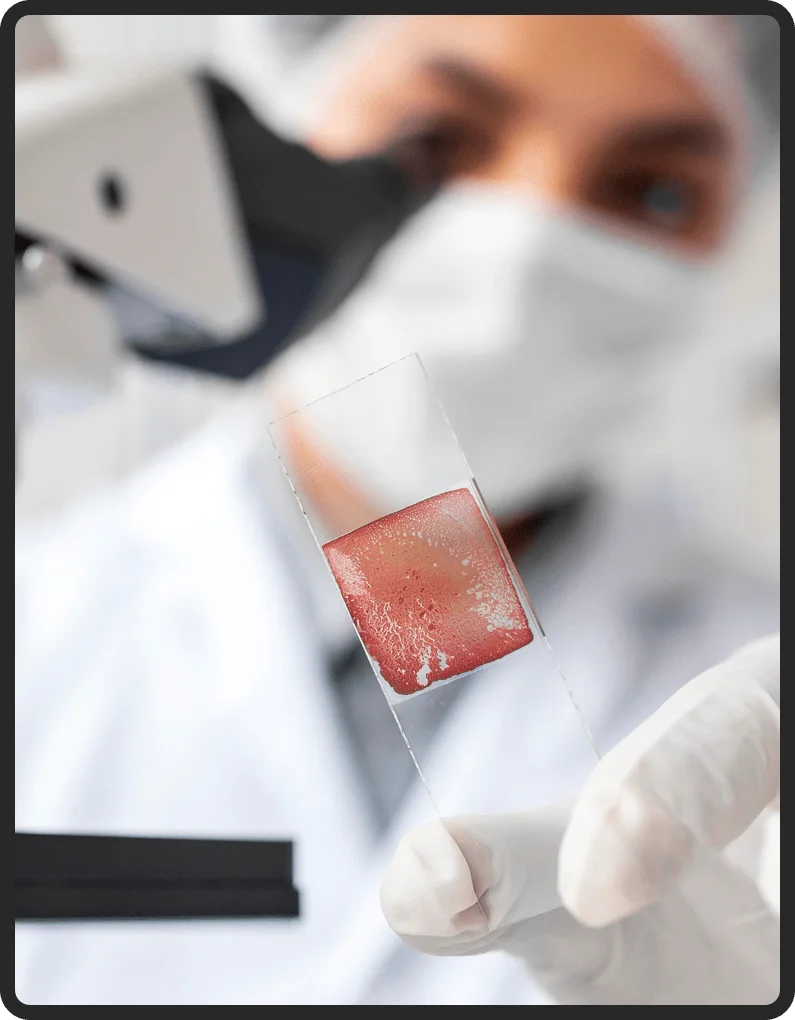
What the best toenail fungus treatment actually depends on
There is no universal winner, and any roundup that hands you one product for everyone is selling something. The best toenail fungus treatment for a single yellowing toenail caught early is not the same as the best option for six thickened, crumbling nails that have been ignored for years. Severity, how much of the nail is involved, whether the infection has reached the matrix at the base of the nail, your age, your circulation and your general health all move the answer around.
What does stay constant is the order of evidence. When researchers put treatments through controlled trials and measure complete cure — a clear nail plus a negative laboratory test — the same hierarchy appears again and again. Oral medicines beat medicated topicals, medicated topicals beat over-the-counter products, and over-the-counter products beat home remedies. Marketing volume runs in almost the opposite direction, which is exactly why this category is so confusing to shop.
So we have ranked by tier, from strongest evidence to weakest, and told you honestly what each option can and cannot do. Where a natural, multi-ingredient product like TerraCalm belongs is at the gentle end of that spectrum, as a grooming choice rather than a medicine — and we will say precisely why.
How we ranked the options: evidence, not hype
Three things decided the ranking. First, the quality and quantity of clinical evidence — a treatment tested in multiple randomised trials outranks one supported by a single small study. Second, reported cure rates, using complete cure where it exists rather than the softer "clinical improvement" that flatters weak products. Third, the regulatory class, because a regulated drug has been held to a standard of proof that a supplement or cosmetic has not. Cost, convenience and side-effect load are real considerations too, but they break ties; they do not overturn the evidence.
Tier 1: Oral prescription antifungals (the highest evidence)
Oral terbinafine is the closest thing this category has to a gold standard, and it has held that position for years. Taken as a daily tablet, commonly for around 12 weeks for toenails, it is absorbed into the bloodstream and built into new nail at the matrix, then persists in the nail plate for months. In head-to-head trials it delivers the highest complete-cure rates of any single treatment, and it is generally considered the fastest route to a clear nail because it attacks the fungus from the inside rather than trying to cross the nail from the top.
Itraconazole is the main alternative, dosed continuously or in pulses over several months, and is often chosen when terbinafine is unsuitable or when the fungus is a non-dermatophyte. Both are prescription-only for good reason: they are processed by the liver, they interact with a long list of other medicines, and a clinician may order blood work before or during treatment. That oversight is the price of the strongest results, and it is why these medicines sit with a doctor and not on a shelf. We compared the internal route against topicals in depth in our guide to oral nail fungus pills versus topical solutions, which is worth reading if you are weighing a tablet against a bottle.
Tier 2: Prescription topical solutions
If an oral medicine is off the table — because of liver concerns, drug interactions, or simple preference — prescription topical solutions are the next best evidenced option. The two names you will hear are efinaconazole, sold as Jublia, and tavaborole, sold as Kerydin. Unlike ordinary creams, these are engineered specifically to penetrate the dense keratin of the nail plate, and they are applied daily for up to 48 weeks.
Their honest limitation is that cure rates in trials, while real, are lower than oral therapy, and they work best on mild-to-moderate infection that has not reached the matrix. They are also expensive and demand almost a year of daily discipline. For the right patient — early infection, a reason to avoid pills — they are a strong, evidence-backed choice; for advanced disease they are usually a supporting player rather than the lead.
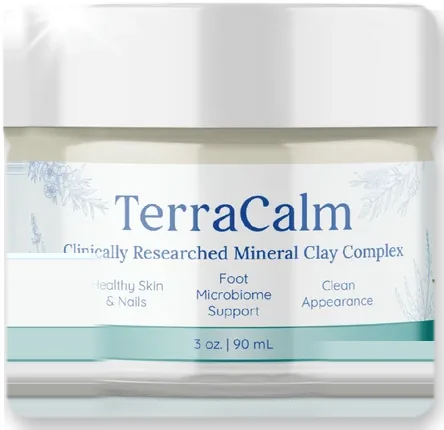
Want the grooming half handled well?
Whatever medical route you choose, feet still need daily care — drier, softer, better-smelling skin around the nail. TerraCalm is a 16-ingredient French green clay cosmetic built for exactly that job, sold on the manufacturer's own store with a 60-day money-back guarantee.
See the Official TerraCalm OfferTier 3: OTC medicated topicals
Move to the pharmacy shelf and the best-evidenced option is undecylenic acid, a fatty acid with a long history in foot care. Used consistently for months on early or mild infection, reported success lands somewhere in the region of 40 to 60 percent — a genuinely useful figure for the mildest cases, and one that collapses once the fungus is established under a thick nail. Clotrimazole and tolnaftate creams are also sold for feet, though these are far better at skin infection such as athlete's foot than at a nail, because a cream cannot cross the nail plate to where the fungus lives.
The realistic way to read this tier is that over-the-counter medicated products are worth trying for a nail you have caught early, applied twice daily with real patience, and are not the right tool for advanced disease. If a month or two brings no change at all, that is your signal to escalate rather than keep buying bottles.
Tier 4: Natural and home topicals
This is where most searches for a natural remedy end up, and it deserves a straight answer rather than either hype or dismissal. Two natural options have actual published data. Tea tree oil was compared with clotrimazole in a small study and performed comparably for surface improvement, though it did not reliably clear infections. Vicks VapoRub, of all things, was studied too: in one trial 27.8 percent of participants showed clearance at 48 weeks. Neither result would let a natural product claim a cure, but both are more than nothing, and for a mild, early nail they are cheap, low-risk things to try. We cover the specifics in our explainer on the benefits and limits of tea tree oil for nail fungus.
The pattern across natural topicals is consistent: small studies, mixed results, real activity in a laboratory dish that does not reliably translate to a human nail, and clearance rates that sit well below the medicated tiers. Treat them as low-cost adjuncts for mild cases and as comfort measures, not as a substitute for a diagnosis or for medicine when the infection is advanced.
Where TerraCalm fits among natural topical picks
Now the honest placement of the product this site covers. TerraCalm is a 16-ingredient French green clay cosmetic — clay plus shea butter, sweet almond and sunflower oils, aloe, manuka honey, vitamin E, bearberry, menthol, and six essential oils including thyme, oregano, cedarwood, tea tree, clove and lavender. That formula reads like a natural topical, and it belongs in this tier for shopping purposes, but with one large asterisk: it is a cosmetic, not a treatment.
What that means in practice is that TerraCalm is built to do the grooming half of foot care well — absorb surface moisture, soften rough skin and calluses around the nail, and leave feet looking and smelling better. Those are real, worthwhile cosmetic outcomes. What it is not, and what no cosmetic can lawfully claim to be, is a cure for a fungal infection. If you want the multi-ingredient natural route for the comfort-and-appearance side of the job, it is an honest fit; if you want the infection itself resolved, that is a Tier 1 or Tier 2 conversation with a clinician. Reading a product this way — grooming versus medicine — is the single most useful habit you can bring to this category.
The 2026 rankings side by side
The table sums up the tiers. Read the final column as strength of evidence for a nail specifically, not as how heavily a product is advertised.
| Tier | Option | Regulatory class | Reported success / evidence |
|---|---|---|---|
| 1 | Oral terbinafine | Prescription medicine | Highest complete-cure rates in trials |
| 1 | Oral itraconazole | Prescription medicine | Strong; used when terbinafine is unsuitable |
| 2 | Efinaconazole (Jublia), tavaborole (Kerydin) | Prescription topical drug | Real but lower than oral; best for mild cases |
| 3 | Undecylenic acid | OTC drug | ~40–60% in mild cases, used consistently |
| 4 | Tea tree oil | Cosmetic / natural | Comparable to clotrimazole for surface in one small study |
| 4 | Vicks VapoRub | OTC topical (off-label use) | 27.8% cleared at 48 weeks in one study |
| 4 | TerraCalm mineral clay | Cosmetic | Not a treatment — grooming, comfort, appearance only |
Three myths worth clearing up before you buy
Myth 1: "Natural works as well as prescription." It does not, and the trials are unambiguous. Natural topicals can offer modest help for mild, early nails, but their clearance rates sit far below oral medicines. Choosing natural is a legitimate decision about side-effect tolerance and values; it is not a decision that gets you equal results.
Myth 2: "There is a treatment that works fast." Nail biology sets the clock and the clock is slow. A toenail grows roughly one to one and a half millimetres a month, so even a fully effective oral course leaves the nail looking unchanged for months while the old damaged plate grows out. Any product promising a visible fix in weeks is selling against physiology. If speed is your priority, read our practical guide to how to get rid of toenail fungus fast without wishful thinking.
Myth 3: "If it is sold online, it must be tested." A prescription drug has cleared controlled trials and an approval process. A supplement or a cosmetic has not; it simply has to be safe and honestly labelled. Being on sale is not evidence of efficacy, and a confident label is not a clinical trial. This single misunderstanding is responsible for most of the money wasted in this category.
Rank treatments by the strength of the evidence behind them, not by the confidence of the packaging. In this category the two run in almost opposite directions.
What no treatment on this list can do
A fair roundup has to include the limits. No pill and no topical restores a nail that has already been destroyed; the damaged plate has to grow out and be replaced, which takes the better part of a year, and if the matrix is permanently scarred the new nail may never look the way it did. Nothing prevents reinfection on its own either — fungi live in shoes, damp floors and the clippers you keep using, so the dull work of drying between the toes, rotating footwear and not sharing tools does more than most people expect. And no product can diagnose you. Because roughly half of abnormal nails are not fungal, buying the best toenail fungus treatment for a nail that is not infected simply wastes months. A clipping and a quick laboratory test settle it, and that one step often changes the whole answer.
Medical note: if you have diabetes, peripheral neuropathy, poor circulation, a suppressed immune system, or any break in the skin of your feet, foot problems are a clinical matter and not a shopping decision. See a clinician before applying or swallowing anything new.
Frequently asked questions
What is the best treatment for toenail fungus?
For most confirmed infections the strongest evidence sits with oral prescription antifungals such as terbinafine, which reach the nail from the inside as it grows out and post the highest cure rates in trials. The best treatment for you, though, depends on how much nail is involved, your general health and your goals, which is why a clinician's assessment beats any online ranking.
What is the most effective OTC toenail fungus treatment?
Among products you can buy without a prescription, undecylenic acid solutions have the longest track record, with reported success in roughly 40 to 60 percent of milder, surface-level cases used consistently for months. Over-the-counter products work best on early or mild infection and struggle once the fungus reaches the nail matrix.
Do natural toenail fungus treatments actually work?
The evidence is limited and mixed. One small trial found tea tree oil performed comparably to clotrimazole for surface improvement, and a study of Vicks VapoRub reported 27.8 percent of participants cleared at 48 weeks. These are modest results from small studies, so natural topicals are best seen as low-cost adjuncts for mild cases rather than reliable cures.
Where does TerraCalm rank among treatments?
TerraCalm is not a medicine and does not belong in the treatment tiers at all. It is a 16-ingredient French green clay cosmetic for grooming, so it sits in the natural topical category as a comfort-and-appearance product for drier, softer, better-smelling feet, not as a treatment for any infection.
Scientific references
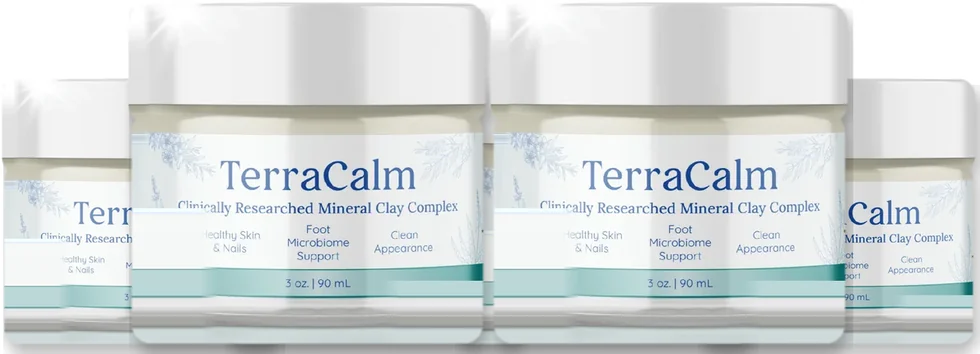
The grooming half of the job, done well
TerraCalm is a mineral clay for drier, softer, better-smelling feet — a cosmetic, sold on the manufacturer's own store with a 60-day money-back guarantee. Sixteen listed ingredients, and an honest account of which of them do what.
Check Availability on the Official Store